


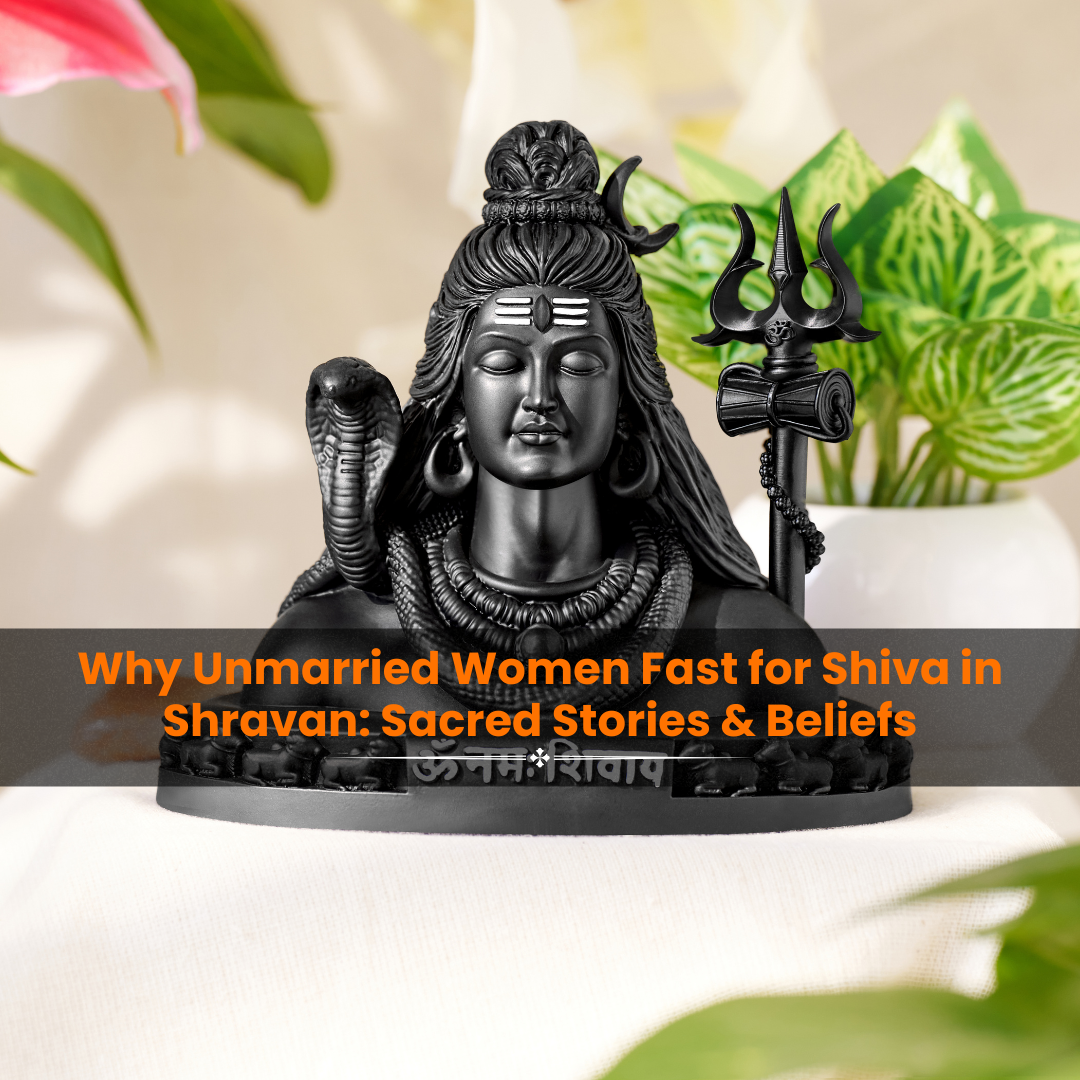
Why Unmarried Women Fast for Shiva in Shravan: Sacred Stories & Beliefs
Shravan, the holiest month dedicated to Lord Shiva, is a time of deep devotion, fasting, and spiritual growth. Among the various rituals followed during this sacred period, one that stands out is the fasting (vrat) observed by unmarried women, especially on Shravan Somvar (Mondays). But why do so many young women choose to fast for Mahadev during this time? Is it just tradition—or is there a deeper spiritual reason? Let’s uncover the legends, beliefs, and spiritual significance behind this beautiful custom.
Mythological Legends Behind the Practice
1. The Divine Union of Shiva and Parvati
According to Hindu mythology, Goddess Parvati was deeply devoted to Lord Shiva and undertook intense penance and fasting to win his heart. Her unwavering tapasya pleased Lord Shiva, and he accepted her as his consort.
Belief: Unmarried women fast in Shravan to seek a life partner who embodies Shiva’s qualities—wisdom, strength, devotion, and detachment.
2. The Blessing of Marriage from Shiva Himself
It is said that Lord Shiva, pleased with sincere devotion, grants the boon of a righteous and loving husband to women who observe the Shravan fasts with faith and discipline.
3. Katha of Shravan Somvar Vrat
There’s a popular story about a Brahmin girl who was advised by a priest to fast every Monday in Shravan and pray to Lord Shiva. Her prayers were fulfilled, and she was married to a virtuous and noble man.
Symbolism: Fasting becomes not just a spiritual act, but a form of manifestation through devotion.
Spiritual Significance
Inner Purity: Fasting and prayer cleanse both body and mind, helping one practice self-control and discipline.
Sankalp (Intention): When done with a pure heart, fasting helps women align with divine energies and set intentions for a fulfilling life.
Divine Feminine Awakening: Parvati’s devotion is a symbol of Shakti—by following her path, women invoke their own inner power.
Rituals Observed by Unmarried Women
>Fasting on Mondays: Many consume only fruits or a single satvik meal.
>Offering Bel Patra, Milk, and Water: These are poured over the Shiva Lingam during abhishekam.
>Chanting “Om Namah Shivaya”: The five-syllable mantra cleanses the aura and mind.
>Listening to or Reading Shiva-Parvati Katha: Brings clarity, faith, and inspiration
What Qualities Do Women Seek in Shiva?
>Unshakeable Calmness
>Wisdom and Detachment
>Loyalty and Unconditional Love
>Strength with Compassion
>Freedom from Ego
By fasting and praying to Shiva, women are not just asking for a good husband—they’re also invoking these same qualities within themselves.
Modern Relevance
Even today, this ancient practice continues to inspire women. It’s no longer just about marriage—it’s about connecting to divine energy, self-respect, patience, and becoming emotionally independent.
In fact, many women now fast as a way to deepen their spiritual journey, regardless of whether they wish to marry.
Final Thoughts
The Shravan Somvar fast is more than a ritual—it's a path of devotion, discipline, and divine alignment. Whether one is seeking a life partner or inner peace, the intention behind the vrat is what truly matters. By following the path of Goddess Parvati, women embrace the strength, grace, and love that define both the divine feminine and masculine.
Har Har Mahadev!
May Shiva bless all seekers with love, clarity, and spiritual fulfillment.
How the Navkar Maha Mantra Pyramid Bridges the Spiritual and Physical Worlds
How to Eat Mindfully During Shravan Month for Spiritual Growth
Related Posts

Tirupati Balaji Black and Gold Idol for Home: Significance, Benefits & Buying Guide

Shiva Dashboard Idol for Diwali Gifting: A Thoughtful Corporate Gift for Employees & Clients

Hanuman Idol for Home & Gifting: Meaningful Spiritual Gifts for Every Occasion

Ram Lalla Diwali Corporate Gifts: Meaningful Gifting Ideas for Employees, Clients & Bulk Buyers

Siddhivinayak Ganpati Idol for Diwali: Corporate & Bulk Gifting Ideas for Employees and Clients

Ram Lalla Diwali Gifts: Meaningful Corporate & Bulk Gifting Ideas for Employees and Clients

What HR Teams Should Look for Before Placing a Bulk Corporate Gift Order
